 Naperville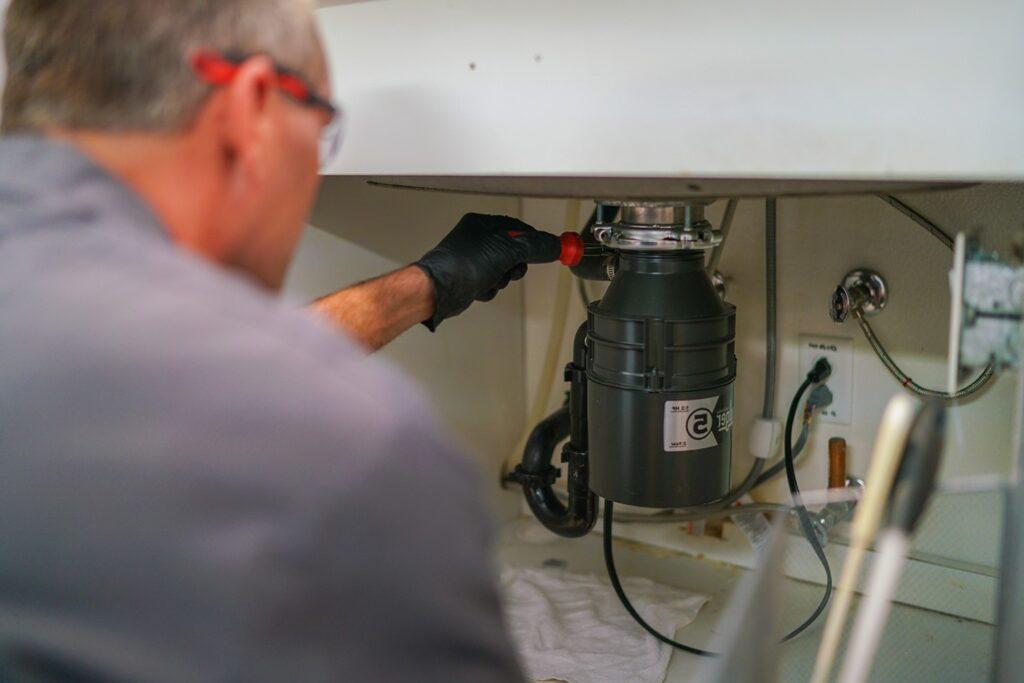
Why Is My Garbage Disposal Leaking?
Despite feeling like one sealed unit, a garbage disposal actually has several separate connection points where water can escape, the sink mount at the top, the dishwasher inlet on the side, and the discharge tube at the bottom where it meets the drain trap. Most leaks trace back to one of these connections wearing out over time, not the disposal itself failing.
Things to Check Before Calling for Repair
- Check the sink flange at the top. The plumber's putty or seal under the sink flange dries out and cracks after several years, letting water seep down around the mounting ring rather than through the drain. This is the single most common source of a "disposal leak" that isn't actually the disposal.
- Check the dishwasher inlet connection. If a dishwasher drains through the disposal, the hose clamp on that side connection can loosen over time. Give it a squeeze and check for wetness around the hose during a dishwasher cycle.
- Check the discharge tube gasket. Where the disposal connects to the drain trap underneath, a worn rubber gasket is a common, inexpensive leak point, especially on older installations.
- Dry everything and run water to isolate the source. Wipe the sink flange, dishwasher connection, and discharge tube dry with a paper towel, then run water and watch closely, the first spot that gets wet tells you exactly which connection has failed.
- Check the three mounting screws are snug. A disposal that's come slightly loose from its mounting ring can leak at the top even with a good seal, since the connection is no longer sitting flush.
When It's the Housing, Not a Connection
If you've dried and checked the sink flange, dishwasher connection, and discharge tube and water is still coming from the disposal's own housing, an internal seal around the motor has failed. InSinkErator units aren't designed to be opened and internally resealed, at that point replacement is the standard, cost-effective fix rather than attempting an internal repair.
Frequently Asked Questions
Why is my InSinkErator leaking from the bottom?
Most often a worn sink flange seal, a loose dishwasher connection, or a worn discharge tube gasket, all of which are separate from the disposal unit itself. Dry each spot and run water to see exactly where it starts.
Can I fix a leaking garbage disposal myself?
A loose hose clamp or mounting screws, yes. A worn sink flange seal usually means removing the disposal to reseal the flange properly, which is where most homeowners call for help.
How do I know if the leak is from the sink flange or the unit itself?
Dry the top mounting ring, the dishwasher hose, and the bottom discharge tube completely, then run water and watch. Water from the housing itself (not a connection point) means an internal seal has failed.
How much does it cost to fix or replace a leaking garbage disposal?
A flange reseal or hose clamp fix costs far less than a full unit replacement. See our full appliance repair cost guide for typical garbage disposal repair ranges.