 Naperville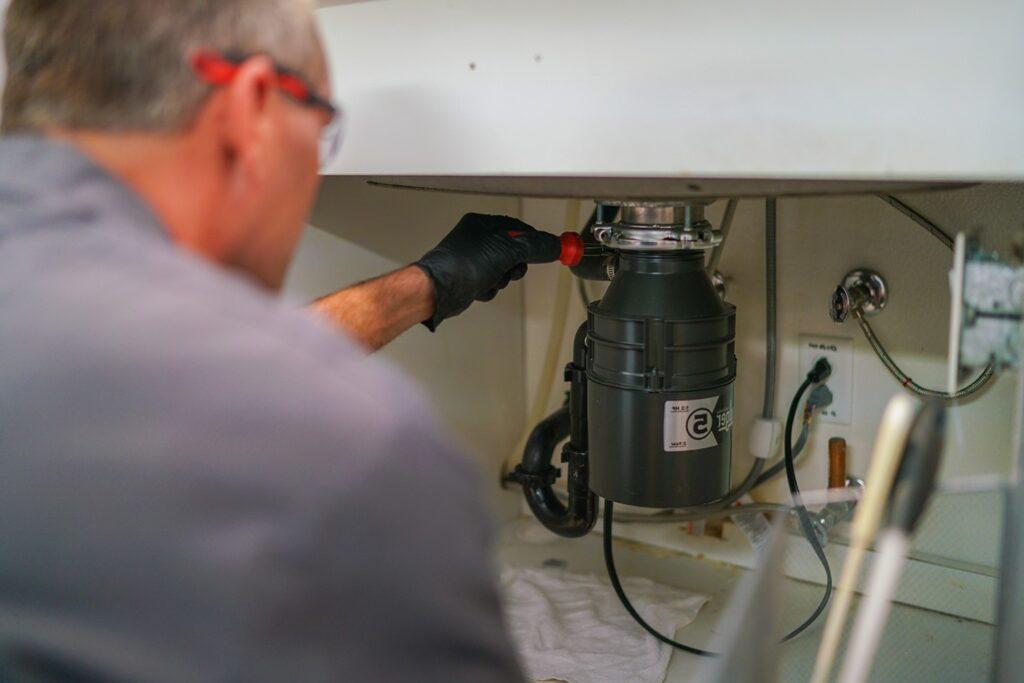
Why Does a Garbage Disposal Hum Instead of Spin?
That humming sound means the motor is receiving power and trying to run, but something is physically stopping the flywheel (the spinning plate with the grinding blades) from turning. It's almost always one of two things:
- A jam. Fibrous food (celery, potato peels), a fruit pit, glass, or a utensil that fell in can wedge the flywheel in place.
- A tripped overload switch. Most disposals have a built-in thermal reset that shuts the motor down if it overheats, often from grinding something too tough or running too long without water.
Both are usually fixable in a few minutes without calling anyone, which is worth trying before assuming you need a replacement.
How to Safely Check for a Jam
- Turn off the wall switch and, for extra safety, flip the breaker that controls the disposal.
- Find the hex hole on the underside of the unit. Most disposals include a small offset Allen wrench specifically for this, if you don't have it, a standard 1/4-inch Allen wrench usually fits.
- Insert the wrench and work it back and forth until you feel the flywheel move freely in both directions.
- Remove any visible debris from the top of the unit using tongs or pliers, never your fingers.
- Find the reset button, a small red or black button on the bottom or side of the unit, and press it.
- Restore power and test with cold water running.
When It's the Motor, Not a Jam
If the flywheel turns freely with the Allen wrench but the unit still just hums when you switch it on, the jam wasn't the problem, the motor itself likely has a wiring fault or burned-out windings. At that point, further attempts to force it usually just risk tripping a breaker or damaging the wiring, and it's time to have it looked at rather than keep trying.
Is It Worth Repairing or Replacing?
Garbage disposals typically last 8-12 years with normal use. A jam is almost always worth clearing yourself, it costs nothing. But if the motor has actually failed:
- Repair usually makes sense if the unit is newer (under about 5-8 years) and this is the first real problem it's had.
- Replacement usually makes more sense on an older unit, or if you've already had it repaired once before for a similar issue.
Disposals are also one of the more affordable appliances to replace outright compared to a full repair on an aging motor, which is worth factoring in before paying for labor on a unit that's already near the end of its life.
How to Prevent This From Happening Again
- Always run cold water before, during, and for a few seconds after grinding, it helps flush waste through and keeps the motor from overheating.
- Avoid fibrous foods like celery, corn husks, and onion skins, they're a leading cause of jams.
- Never put bones, fruit pits, glass, or utensils down the disposal, even by accident.
- Grind in small batches rather than dumping a large amount of waste in at once.
- Run it regularly, even briefly, an unused disposal is more prone to corrosion and stuck flywheels over time.
Frequently Asked Questions
Why does my garbage disposal hum but not spin?
Most often, the flywheel is jammed by food or debris, or the built-in thermal overload has tripped from overheating. Both can often be fixed by clearing the jam with an Allen wrench and pressing the reset button.
Is it safe to use an Allen wrench to unjam my disposal myself?
Yes, as long as the power is fully off at the switch and ideally the breaker too. Never insert your hand or fingers into the unit, even with the power off, use tongs or pliers to remove any debris.
How do I know if my disposal's motor is dead versus just jammed?
If the flywheel turns freely with an Allen wrench but the unit still only hums when powered on, that points to a motor or wiring problem rather than a simple jam, and it's time to have it inspected.
How long do garbage disposals typically last?
Most last 8-12 years with normal use. Regular use, running water while grinding, and avoiding fibrous foods and hard objects all help it reach the higher end of that range.